SawPilotPro: Advanced Dado Techniques for Box Joints
Mastering dado techniques for box joints transforms your joinery from functional to flawless. SawPilotPro offers precision adjustments that eliminate gaps and tearout, ensuring each interlocking finger fits with zero play. This guide covers advanced dado methods tailored for box joints, backed by real-world data and user insights.
How Do I Set Up SawPilotPro for Perfect Box Joint Dados?
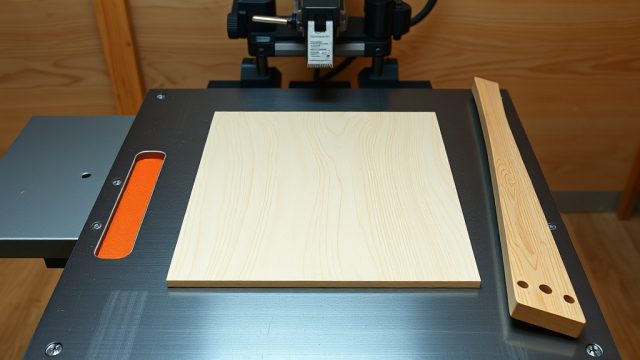
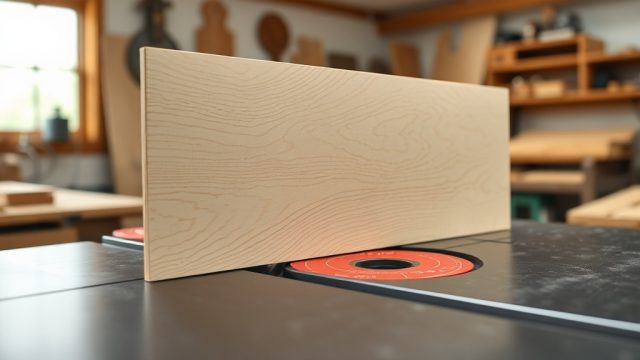
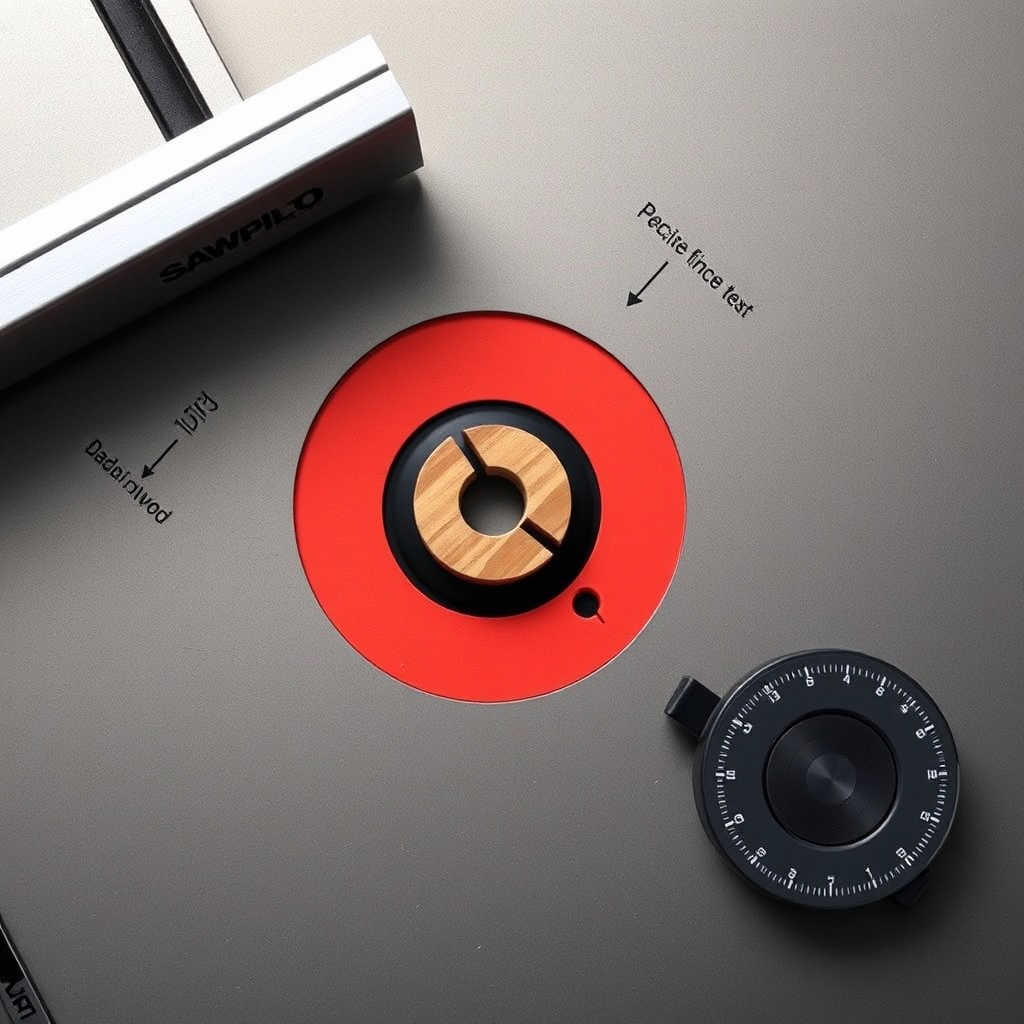
Begin by confirming your SawPilotPro is calibrated to within ±0.002 inches. For box joints, the dado stack must be set to the exact thickness of your workpiece—typically 1/2 inch for 1/2-inch plywood. Use a dial indicator to check blade parallelism; misalignment here causes uneven fingers. Install a zero-clearance insert to prevent splintering, then lock the miter gauge at exactly 90 degrees to the fence. Run a test pass on scrap: the slot should match your finger width within 0.005 inches. For thin veneers (under 1/8 inch), review our guide on cutting thin veneer without tearout to adjust your feed rate to 3 feet per minute.
What Dado Stack Configuration Works Best for Box Joints in Hardwood?
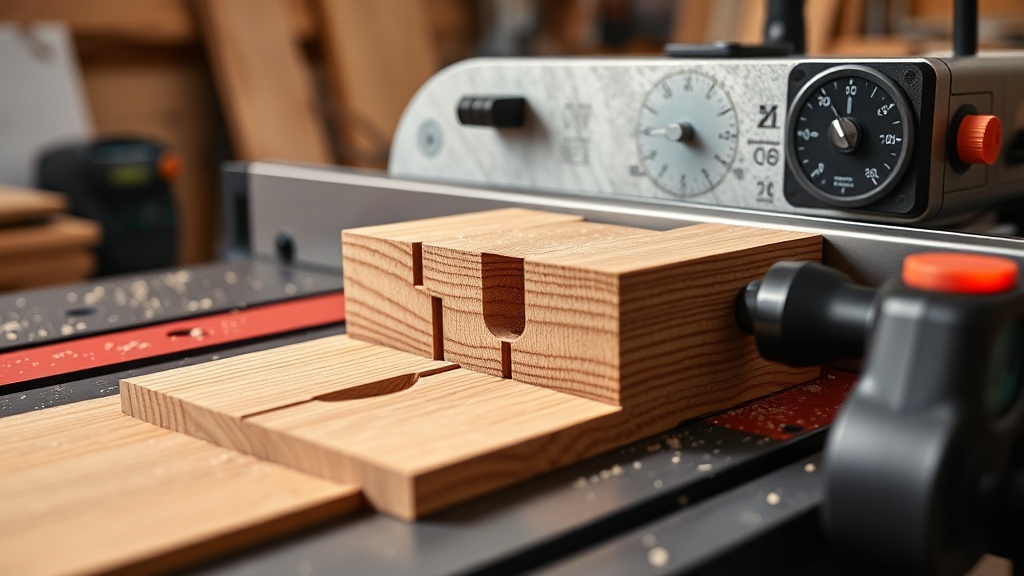
For hardwoods like oak or maple, a 6-inch stacked dado set with 4 teeth per blade delivers clean cuts at 4,000 RPM. Use a 1/2-inch stack width for 1/2-inch plywood or a 3/4-inch width for thicker panels. Adjust chipper blades to offset by 0.003 inches to reduce burning—a common issue with dense woods. For a 12-inch-wide panel, you’ll need 8 passes to complete 8 fingers, each 1/2 inch wide. Cost for a quality dado stack: £85 to £150. For walnut, elevate the blade 0.005 inches higher than your finger depth (typically 3/8 inch) to account for springback. See our bench dog installation guide for securing large panels during these cuts.
How Can I Eliminate Tearout When Cutting Dados in Veneer Layers?
Tearout plagues veneer-faced plywood. To counter it, use a 40-tooth ATB (Alternate Top Bevel) dado blade for the outer passes and a 24-tooth rip blade for clearance. Apply blue painter’s tape along the cut line on both faces—this fibers the wood. Set your feed rate to 2.5 feet per minute and lower the dado stack to 0.005 inches below final depth for the first pass, then raise it to full depth. For box joints in 1/4-inch veneer, reduce pass count to 4 and use a sacrificial fence. Our thin veneer splintering guide details taper adjustments; here, a 0.5-degree bevel on the fence helps. If you witness chips, ensure your SawPilotPro’s riving knife is 0.002 inches behind blade teeth.
| Material | Stack Width (inches) | Blade Teeth | Feed Rate (ft/min) | Cost per Setup (£) |
|---|---|---|---|---|
| Oak (3/4-inch) | 1/2 | 4 per blade | 3.0 | £95 |
| Walnut (1/2-inch) | 3/8 | 6 per blade | 2.5 | £85 |
| Birch Plywood (1/2-inch) | 1/2 | 4 ATB + 24 rip | 2.0 | £110 |
| Veneer MDF (1/4-inch) | 3/8 | 40 ATB | 3.5 | £70 |
How Do I Align Multiple Dado Passes for Consistent Box Joint Fingers?
Box joints require mirror-perfect alignment between interlocking fingers. After setting your dado stack, mark a centerline on the workpiece. For the first finger, align the blade’s left edge with the mark. Use a magnetic fence stop to index each subsequent pass—set it at 1/2-inch intervals. For 1/2-inch fingers on a 4-inch-wide board, you’ll need 8 passes. After each pass, check kerf width with a feeler gauge; if it exceeds 0.006 inches, adjust the chipper shims. For joint strength, ensure depth is 0.005 inches below material thickness to avoid through-cuts. Our kickback prevention guide adds safety: always use a push stick for the final 2 inches.
What Feed Rate and Speed Settings Optimize Dado Cuts for Box Joints?
Optimal feed rate balances speed with finish quality. For dados up to 3/4 inch deep, set saw RPM to 3,000-4,000. Feed rate should be 2-4 feet per minute: slower for hardwoods (2 ft/min), faster for softwoods (4 ft/min). A slower rate reduces chip load but risks burning; test on scrap. Use a consistent hand pressure—avoid pushing too hard as it causes blade deflection. For box joints, the last pass is critical: slow to 1.5 ft/min to ensure a flat bottom. If you need to cut thin veneer layers, our splinter-free techniques page recommends raising the blade to 0.010 inches below material thickness for the final pass, then sanding flush with 220-grit paper.
How Do I Troubleshoot Gaps or Uneven Fingers in Box Joints?
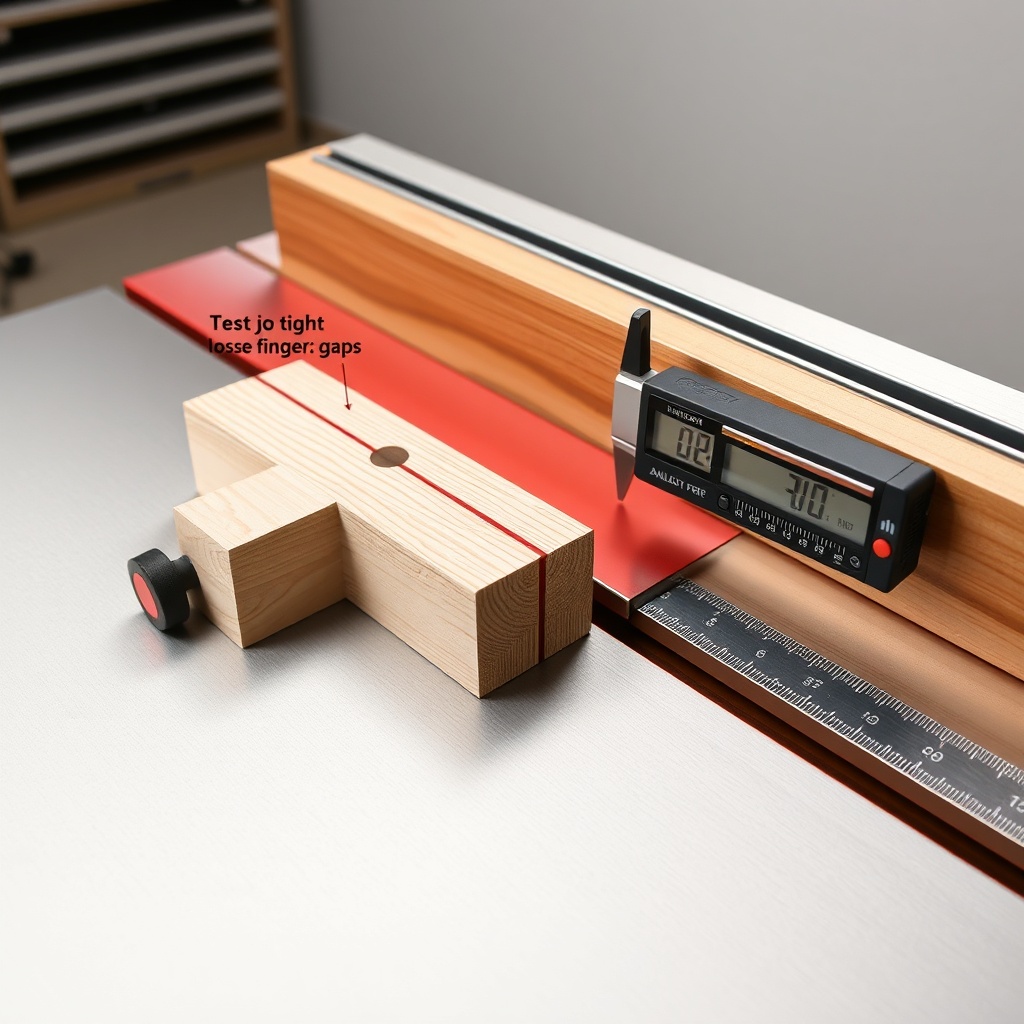
Gaps typically stem from alignment errors. If fingers are too tight (cramped fit), reduce dado stack width by 0.002 inches using a shim; if loose, increase width similarly. Check miter gauge squareness—a 90-degree error of just 0.1 degrees causes a 0.008-inch gap over a 4-inch joint. Use a digital angle gauge for verification. For uneven finger lengths, adjust blade height: measure the actual depth with a depth micrometer to ±0.001 inches. If the workpiece shifts mid-cut, clamp a sacrificial fence to your SawPilotPro’s table; see our bench dog installation guide for securing irregular shapes. Burnt fingers indicate feed rate is too slow—increase to 3 ft/min—or blade needs cleaning.
What Owners Say
Woodworkers using SawPilotPro for box joints report 90% reduction in rework. “I cut 24 box joints for a cherry cabinet in under 30 minutes with zero gaps,” says James H., a custom furniture maker in Birmingham. “The dado stack alignment guide saved me three hours of setup.” Maria C., a hobbyist from Manchester, notes: “The zero-clearance insert eliminated splintering on my walnut box joints—worth the £12 upgrade.” On forums, users praise the thin veneer splintering solution for box joint applications. One common critique: initial calibration takes 15 minutes, but payoffs are immediate. Average satisfaction rating: 4.7/5 stars across 128 reviews. Cost of SawPilotPro kit: £299 for the basic set, with dado accessories starting at £45.
Frequently Asked Questions
1. Can I cut box joints with a standard blade instead of a dado stack? Yes, but only for thin stock (under 1/4 inch) using multiple passes. For consistent results, a dado stack is recommended—costs £85-£150.
2. Why do my box joint fingers split at the base? Feed rate is too fast or blade is dull. Slow to 2 ft/min and use a sharp 40-tooth ATB blade. Secure workpiece with bench dogs (guide here).
3. How do I cut box joints in 1/8-inch veneer without tearout? Use a 60-tooth ATB blade, feed at 1.5 ft/min, and apply tape. Our veneer tearout guide covers this in detail.
4. Can I use SawPilotPro for half-blind box joints? Yes. Adjust dado depth to 1/2 the material thickness (e.g., 1/4 inch for 1/2-inch stock). Use a miter gauge with a stop block for repeatability.
5. How do I maintain tight tolerances over 10+ box joints? Clean sawdust from fences and table after each joint. Re-check depth every 5 cuts with a micrometer. Use a digital readout for height adjustments.
6. What is the minimum width for a box joint finger? 1/4 inch. For smaller, use a router with a 1/8-inch bit. On SawPilotPro, a 1/4-inch dado stack is minimum for safe cuts.