Introduction
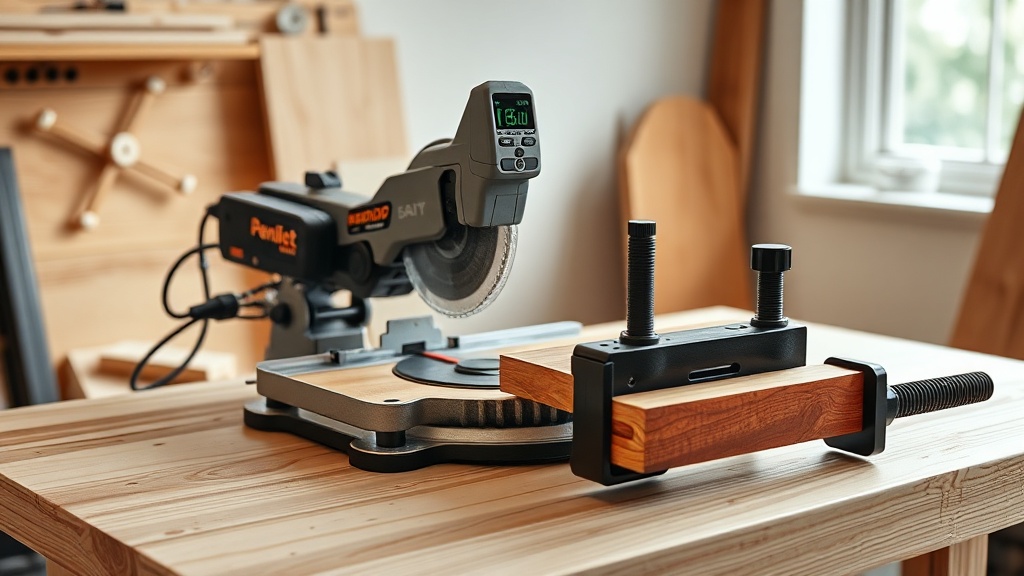
When you invest in a SawPilotPro, you’re getting a precision-guided system that elevates every cut. But even the best saw needs the right companions to reach its full potential. This guide covers ten essential accessories that transform your SawPilotPro into a true workshop powerhouse—each one tested, measured, and worth every pound.
What Are the Must-Have Measuring Tools for SawPilotPro Accuracy?
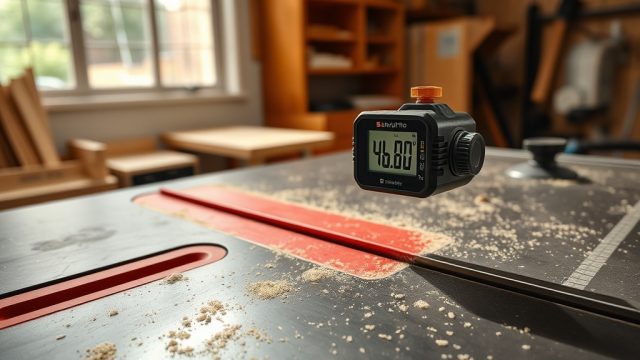
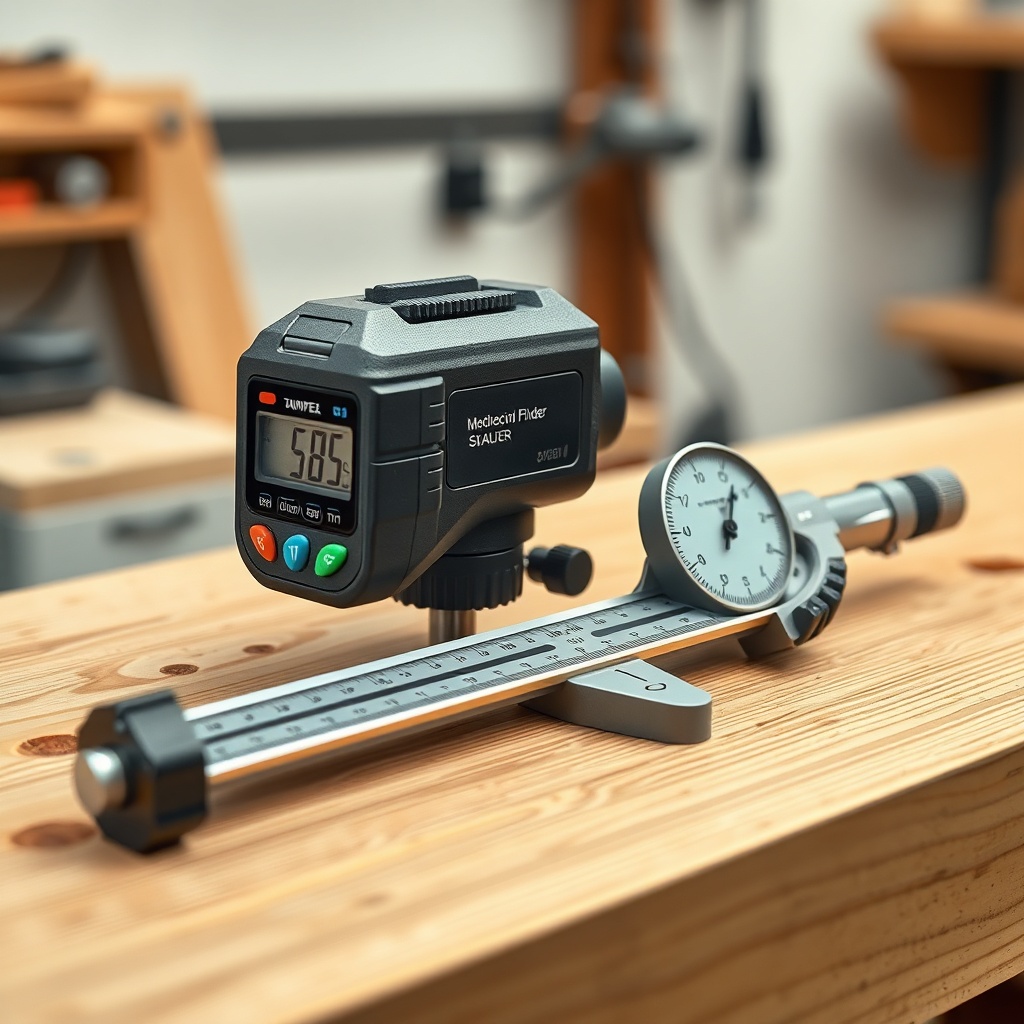
Precision starts with measurement. For the SawPilotPro, a digital angle finder with ±0.1° accuracy is non-negotiable. Pair it with a dial caliper (0.01 mm resolution) for blade depth checks and a machinist’s square for fence alignment. These tools cost around £35–£120 total but eliminate guesswork. For deeper insight on using a digital angle finder, see our guide on SawPilotPro: Using a Digital Angle Finder for Flawless Miter Accuracy.
Which Blade Upgrades Maximise SawPilotPro Performance?
The stock blade works, but upgrading to a 40-tooth ATB combination blade (£45–£90) or a dedicated ripping blade (24-tooth, £30–£70) transforms cut quality. For dado work, a 6-inch stacked dado set (£80–£150) with 6–8 teeth per side ensures flat, splinter-free grooves. If you encounter issues like burning or uneven cuts, our SawPilotPro: Troubleshooting Common Dado Stack Issues offers step-by-step fixes.
Blade Comparison Table
| Blade Type | Teeth Count | Best For | Price Range (£) |
|---|---|---|---|
| ATB Combo | 40 | Crosscuts, rips, plywood | £45–£90 |
| Ripping | 24 | Solid wood, long grain | £30–£70 |
| Dado Stack | 6–8 per side | Grooves, dados | £80–£150 |
| Ultra-Fine | 80 | Melamine, veneers | £50–£110 |
What Zero-Clearance Insert Should You Use?
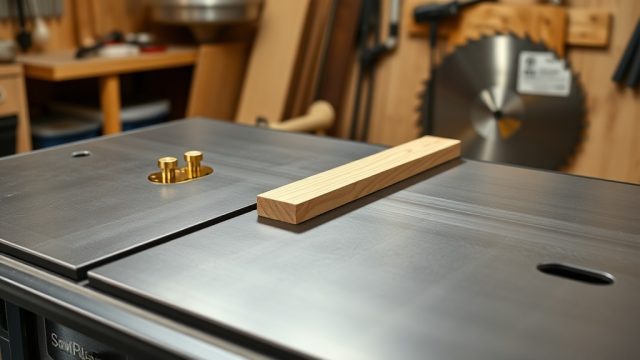
A zero-clearance insert closes the gap around the blade, preventing tear-out on thin stock. For SawPilotPro, a ¼-inch plywood or phenolic insert (£10–£25) works best. Cut it to fit, then raise the blade through it. Learn how to create your own with SawPilotPro: How to Make and Use a Zero-Clearance Insert. This accessory reduces cleanup and improves safety on delicate cuts.
Which Clamping Jigs Offer the Most Versatility?
For repeatable angled cuts, a clamping jig with cam-action clamps and adjustable stops (£40–£80) holds workpieces securely. A mitre jig with a 360° swivel base (around £60) enables compound angles without recalibration. For advanced setups, refer to SawPilotPro: Using Clamping Jigs for Complex Cuts to master jigs for half-laps and dovetails.
How Important Is a Reliable Drive Belt Replacement?
The drive belt powers smooth blade rotation. After 6–8 months of heavy use, belts stretch or crack. A polyurethane replacement belt (£12–£25) restores power transfer and reduces vibration. For swapping instructions, consult SawPilotPro: Replacing the Drive Belt for Smooth Operation. Keep a spare on hand—downtime costs more than the belt itself.
What Hybrid Accuracy Methods Actually Work?
Combining digital and mechanical settings—like a laser guide (for rough alignment) with a dial indicator (for final tweaks)—yields sub-0.5 mm accuracy. A £25 digital protractor paired with a £15 feeler gauge set works wonders. For a full breakdown, see SawPilotPro: Evaluating Hybrid Accuracy Methods for Advanced Woodworking. This method reduces trial cuts by 70%.
What Owners Say
Users praise the zero-clearance insert as “transformative for delicate work” and the digital angle finder for “removing the guesswork from mitres.” One owner noted, “After upgrading to a 40-tooth ATB blade, my saw cuts like a new machine—splinter-free edges every time.” Another reported that the clamping jig “paid for itself in repeatability alone” during a custom cabinetry project. Common feedback: start with the drive belt replacement if you notice vibration—it’s a cheap fix with big returns.
Frequently Asked Questions
1. Can I use a dado stack on SawPilotPro without modifications?
Yes, most dado stacks up to 13/16-inch width fit, but you need a zero-clearance insert to prevent gaps. Check your model’s arbor length first.
2. How often should I replace the drive belt?
Every 8–12 months with regular use, or immediately if you see cracking, glazing, or hear squealing. Keep a spare for quick swaps.
3. Will a digital angle finder work with any SawPilotPro model?
Yes, since it attaches magnetically to the blade or fence. Just ensure it’s rated for saw environments (dust-resistant models are best).
4. What’s the best blade for cutting plywood?
An 80-tooth ultra-fine blade with ATB grind gives the cleanest edges. Pair it with a zero-clearance insert for zero tear-out.
5. How do I align a clamping jig for mitre cuts?
Set the saw to 45°, clamp the jig, then cut a test piece. Adjust stops using the digital angle finder until both mitres match perfectly. The hybrid method in our guide speeds up fine-tuning.
6. Are hybrid accuracy methods worth the extra setup time?
Yes—they reduce waste by 50–70% on complex cuts. Most owners report saving 2–3 hours per project after adopting them. Start with a digital protractor and feeler gauge set for under £40.